
The headlines about Title IX can leave you wondering: Am I still protected at school?
The answer is that students still have rights, but the protections available depend on where you live and what happened.
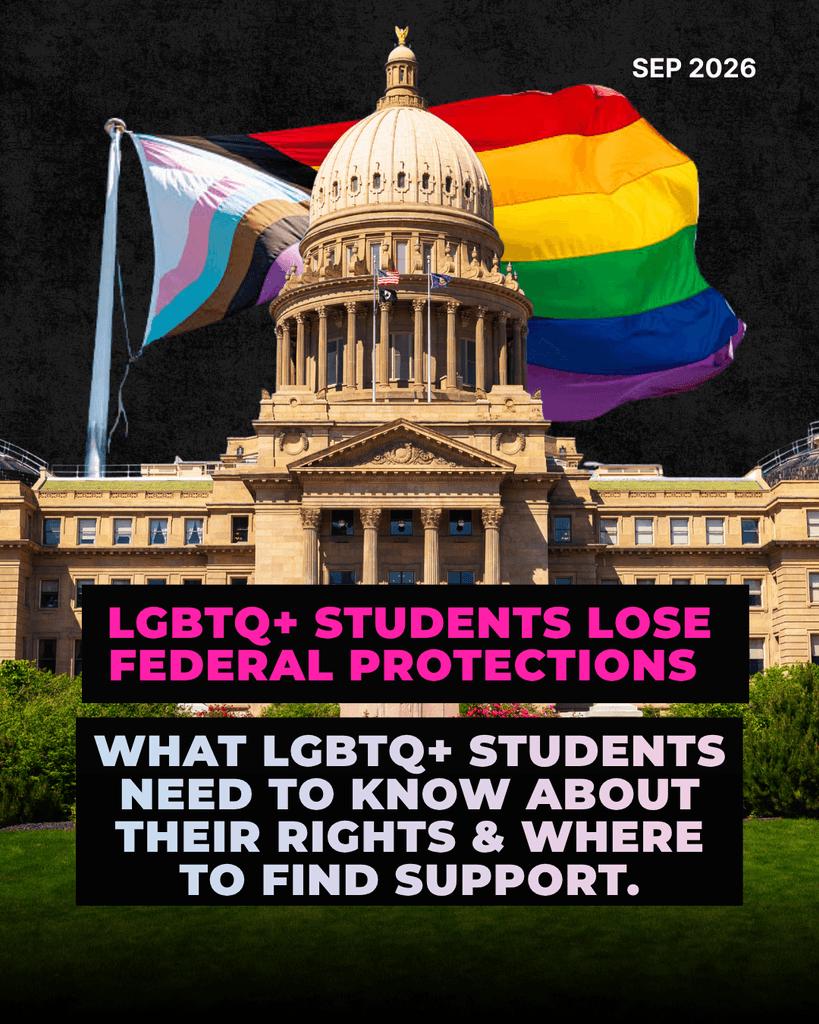
What changed?
The Trump administration has formally removed the 2024 Biden-era federal rules that specifically protected students from discrimination based on sexual orientation and gender identity.
A court had already struck down those rules. The latest action removes them from the published federal regulations.
What does this mean?
The federal rules no longer include those explicit LGBTQ+ protections. But Title IX itself has not disappeared. It still addresses sexual harassment and sexual assault in schools that receive federal funding.
Some states also have their own laws protecting LGBTQ+ students. Questions about bathrooms, sports, names, and privacy need to be checked separately.
Which states have their own protections?
According to the Movement Advancement Project, these states have laws against gender-identity discrimination in schools:
California, Colorado, Connecticut, Hawaii, Illinois, Maine, Maryland, Massachusetts, Michigan, Minnesota, Nevada, New Hampshire, New Jersey, New Mexico, New York, Oregon, Vermont, Virginia, and Washington, plus Washington, D.C.
Other states have protections through regulations or interpretations of existing laws. A state appearing on this list does not guarantee the same protections for every school issue.
Check the state protection tracker for more information.
What can you do if something happens at school?
- Keep a record. Save relevant messages and write down what happened.
- Ask for the policy. Request your school’s current rules in writing.
- Ask about privacy. Find out who will see your information before sharing personal details.
- Find support. Contact your school’s Title IX coordinator or Lambda Legal’s Help Desk for information and resources.
You deserve support and a clear explanation of your options. You do not have to figure out every rule before asking for help.
Information checked September 28, 2026. This guide provides general information, not legal advice.
Source: The Queer Trans Project